

Masterclass with…
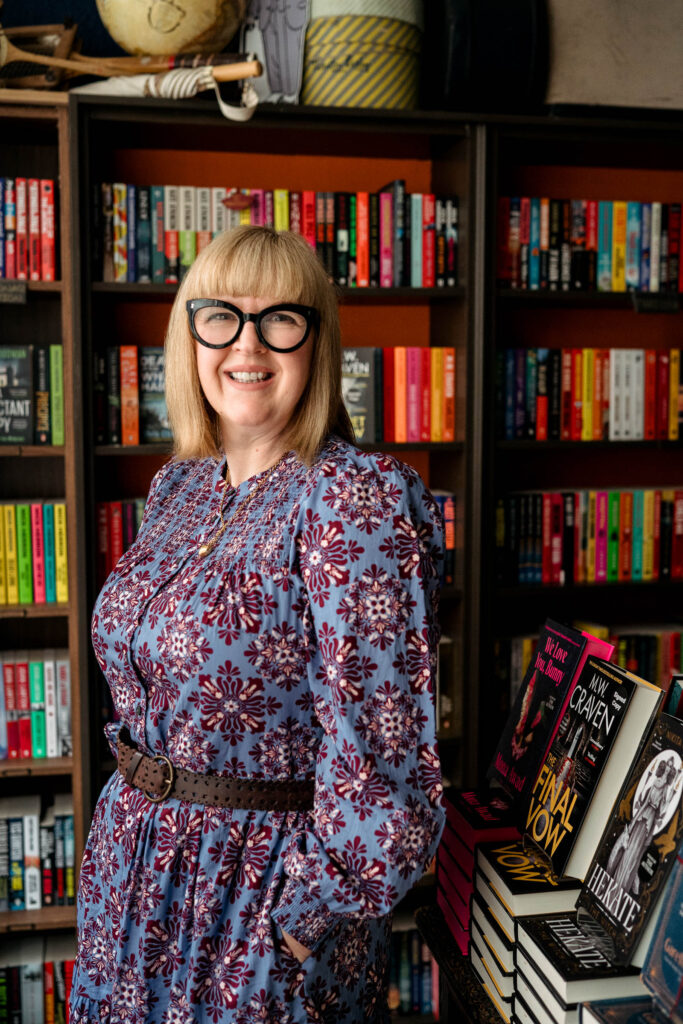
Jennie Godfrey, Sunday Times No1 best selling author
I am very aware of the role that luck and timing play in success in (traditional) publishing, and that is one of the reasons I find it tricky to give advice whenever I am asked by writers. Having said that, there are definitely things that have helped me walk the publishing tightrope while also staying sane and even (most of the time) having a wonderful experience.
Take it seriously but not too seriously.
From the beginning I took writing seriously. I carved out time for it, called myself a writer and invested in learning about the craft, long before I earned a penny from it. I have found that this quality of being ‘all in’ brings a different energy to whatever I am doing.
I have also learned when to step away from it and remember that there is a world outside publishing. Every now and again, I make a conscious effort to connect with the fact that while writing is my existence (!) that isn’t true for everyone else, and that’s a good thing.
Be informed but not so informed you disappear into the cyclone of doom.
I have always liked to understand how things work, and the publishing industry is no different. Right from the beginning of my writing journey I read The Bookseller, I went to work in Waterstones, I followed agents and editors on social media and soaked up all the information I could get. This helped me in managing my expectations and in going into conversations with my agent and publisher from an informed, engaged perspective.
The downside to being informed, is that people don’t tend to write articles and posts about everything being wonderful. There is inevitably a negative bias. But in my experience, life operates like a social media algorithm, in that, whatever you put your attention on, you get more of.
That’s not to say that the industry is not challenging. It definitely is. This isn’t about toxic positivity it’s about balance. I’ve learned to put the majority of my energy into what counts, the writing.
Be self-critical but not too self-critical.
When I first started writing The List of Suspicious Things I was impressed with my early efforts. I thought I knew a lot about writing already. Now, I look at the finished novel and see how much I had to learn, and still do.
The best way to do that is through doing, putting your work out there, and getting feedback. Knowing when to stop polishing and perfecting and get external input is really important.
Be curious and open to learning, but not as an excuse to procrastinate.
Linked to the above is the fact that one of the great joys of writing (for me) is that I will never be done learning. I devour books, talks, podcasts and courses on craft and learn so much from them. I’m also conscious that those things can be a distraction from actually doing the writing.
Learn as much as you possibly can, be constantly increasing your knowledge, but also WRITE.
Be positive but not delusional
I made a conscious decision right at the start to celebrate every good thing that happened on my journey to publication. I remember getting a place on a writing course and crying with as much joy as I did on the day The List of Suspicious Things was published. Those celebrations have kept me going during the long periods of grafting and waiting.
I also had a strategy for dealing with rejection; allowing myself a time period during which I was allowed to grieve, feel disappointed and rage against the machine (there is no point in denying those feelings) before I picked myself up and carried on. Rejection is hard-wired into the creative career, and the quicker I pick myself up, the quicker I tend to get over it.
Whatever stage you are at in your own writing career, I hope these help.

Related Articles
Manuel Muñoz on the magic of a great story
Tania Hershman’s Writing Philosophy: There Are No Rules