
Sarah Moss

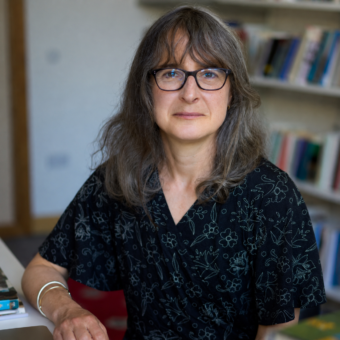
Sarah Moss writes novels, memoir, essays and literary journalism.
Her books include Ghost Wall, Summerwater, and most recently Ripeness and My Good Bright Wolf, which won Saltire Scottish Non-Fiction Book of the Year 2025.
She has been nominated for prizes including the Women’s Prize, the Wellcome Prize, the Polari Prize and the RSL Ondaatje Prize, and was made Fellow of the Royal Society of Literature in 2019.
Sarah has a BA, M.St. and D.Phil from Oxford University and has taught and directed Creative Writing MA and MFA programmes at several universities.
She was born in Scotland, grew up in northern England and now lives in Dublin.
Deadline for memoir entries: 30 September 2026, Midnight UK time.
Anthony Anaxagorou
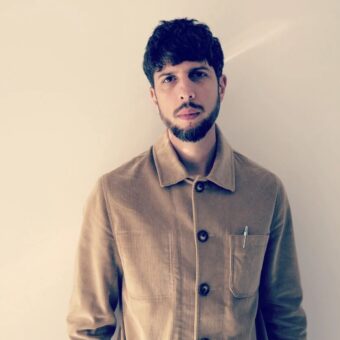
Anthony Anaxagorou FRSL is a British-born Cypriot poet. His collection, Heritage Aesthetics (2022) won the RSL Ondaatje Prize 2023, was shortlisted for the Anglo-Hellenic League’s Runciman Award and was listed as one of New Statesman’s top books of 2022. His collection, After the Formalities was shortlisted for the 2019 T.S. Eliot Prize and was a Telegraph and Guardian poetry book of the year. Anthony is artistic director of Out-Spoken, a monthly poetry and music night held at London’s Southbank Centre. He is editor-in-chief of Propel Magazine, an online literary journal and the founder and curator of WriteBack, a quarterly literary series held at the British Library. In 2023 he was elected as a Fellow of the Royal Society of Literature.
https://anthonyanaxagorou.com/
Instagram: @anthony_anaxagorou
What are you looking for in a poem?
I’m keen to see how poets choose to navigate themes and subjects that have obsessed writers for centuries. I really want to be surprised and moved by what I read. Good luck to everyone entering. I’ll see you on the page!
What I wish someone had told me when I was starting out:
That a life in poetry is made up of many moments. Some of those moments are quiet, some are bewildering and some are rewarding. Accept and understand artmaking takes time and just because you’re not writing doesn’t mean you’re not working, and that working sometimes involves lying flat on the ground and looking at the ceiling for thirty minutes. That even if you ever only wrote one thing and that one thing touched the life of only one other person, then that is having a material impact on a human life, and that is more than enough.
When I’m stuck, this is what helps me move forward:
I walk or exercise or ride my motorbike. I listen to music for long periods of time – songs which are poetry adjacent, where the language is flavoured by the music. I also try not to fight it and accept being stuck today doesn’t mean being stuck tomorrow. Some days are not meant to be for writing; they are meant to be for being stuck and frustrated. They want you to realise how much the work means and how hard you’re willing to work for it.
My best writing prompt is:
Write out from where you’ve never been.
How I know when a piece of writing is finished:
When I see it in print.
The best thing I ever did for my writing is:
Learn how to take criticism. Learn how to separate my ego and my subjectivity from the work. Learn who I should learn from and learn how to read better. More broadly, more openly. To trust my reading-mind, my intellect and my intuition when inside the text.
Someone who has influenced me and my work:
I think Lorca was the first poet I read whose poetry almost alchemically stimulated both my body and mind in a way I’d never quite experienced. I remember being in my early 20s, picking up a copy of Poet in New York in my local library and feeling so sad and disparing when reading the poems, but also having no idea how he was making me feel this way. There was nothing solid in the poems which suggested the speaker was sad yet somehow all the imagery felt sad and lonely and estranged.
I’m currently reading:
Mojave Ghost by Forrest Gander, Hurricane Season by Fernanda Melchor and Silk Work by Imogen Cassels.
What it feels like to see your words in the world:
It’s a strange slightly exposed feeling at first but then you get used to it and it stops being a big deal. I see myself as a voice in conversation with a bunch of other voices – some alive and some dead, but in conversation nonetheless.
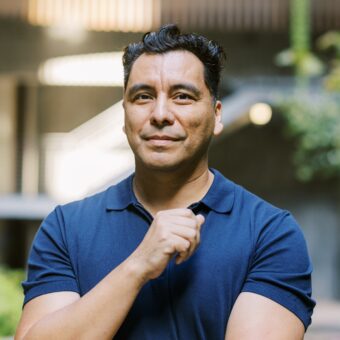
Manuel Muñoz
Manuel Muñoz is the author of four books, including The Consequences, a story collection published by The Indigo Press in 2022. He has been recognized with a Whiting Award, three O. Henry Awards, the Joyce Carol Oates Prize, two selections in Best American Short Stories, and, most recently, a MacArthur Fellowship. He lives in Tucson, Arizona, in the desert Southwest of the United States.
https://www.manuel-munoz.com/
Instagram: el_zigzagger
The next story or poem or essay is never guaranteed, so relish the one you have just completed. Celebrate your contribution to the world of literature, where I believe every voice matters.
I immediately pull a few favorite short stories and read their first paragraphs. I try to learn their cadences all over again.
…to start with the simplest sentence possible, stripped to the bone. I ask myself how much that sentence tells me about the story I’m trying to shape.
When a trusted reader can spot a title within the draft that I had dismissed the entire time, then I know something is calling to their attention (and often, it is very obvious and reveal my stubborn streak)
I have ignored anyone who minimized my straightforward, realist approach. We each write in our own ways and it makes little sense to allow others to tell you the best way to construct your story.
I was lucky in life to work under the guidance of the gifted Chicana novelist Helena María Viramontes. She allowed me to see the moral underpinnings of a literature that can include everyone, how the vulnerable, the meek, and the lost have stories just as important to tell.
Nicholas Boggs’s excellent Baldwin: A Love Story; Collected Stories by Bernard MacLaverty; and the last of the inaugural Booker Prize shortlist of 1969, Nicholas Mosley’s Impossible Object (I like to read award shortlists from decades past).
When my students publish their first stories, I understand why my mentors were always so excited, almost to the point of exaggeration. But now I know that their joy was genuine. As a teacher working with early-career writers, I see their drafting, their frustration, and their hope. I am happier for them to see their words in the world than my own, to be honest. The validation makes them work even harder for the next one and I am heartened by anyone moved to keep practicing their art.
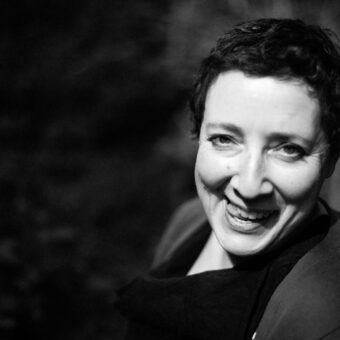
Tania Hershman
Tania Hershman is a queer writer of odd things, the author of three collections of short stories and flash fiction, four books of poetry and two hybrid books. Tania’s creative-non-fiction hybrid book on Time is forthcoming from Guillemot Press. Tania is editor of Fuel: An Anthology of First-Prize-Winning Flash Fictions Raising Funds to Fight Fuel Poverty, offers monthly writing prompts/provocations/exercises through Unbox Your Words – Give Yourself Permission to Play on Substack, and has a PhD in creative writing inspired by particle physics.
Instagram: @tania_hershman_writes
“What I am always looking for is a voice that grabs me right from the first words so that I have no choice but to carry on reading. This might be a character, or a narrator, but what I want is freshness of language. No need for long fancy words or complicated plots, just write what only you can write in the way you want to write it. And send me the pieces you think only you might love, that might be “too strange” or “not quite enough…” There are no rules!” Tania Hershman, Flash Fiction Judge
That everyone does it differently, this writing thing. That there definitely isn’t “one way” to write, and that each writer probably has more than one way. You find what works for you, and no-one else can tell you what you “should” or “shouldn’t” do. There are no rules!
I don’t ever think of myself as “stuck”, I call it a “creative pause”, and for me that really is how it feels. I don’t write every day, sometimes a few weeks will go by. I let it be, I don’t feel bad about it. I feed myself – by reading, watching TV, films, going for a walk.
The world – inspiration is everywhere! Also, I love to collide two (or more) seemingly completely different things, like (as I did in a recent Zoom workshop) physics and fairy tales, and see what happens.
It’s finished when I feel it in my body when I read it out loud to myself, no matter how short or long – this is what I do with book-length works as well as tiny pieces.
Give myself permission to write what I want in the way I want to write, and use the term “hybrid writing” to give me that permission to let go of labels, genres.
Just one person?? A few authors who have given me that permission I mentioned are Aimee Bender, Mary Ruefle, Ann Carson, Richard Brautigan, and Lydia Davis.
Frankie McMillan’s new collection, Eddie Sparkle’s Bridal Taxi, The Sky Around my Father by Emilie Jelinek, and The Dawn of Everything by David Graeber and David Wengrow.
The thrill never ever wears off, whether it is a tiny stand-alone piece or a book with actual pages and a cover!
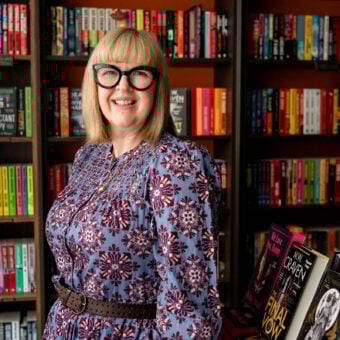
Jennie Godfrey
Jennie Godfrey was raised in West Yorkshire in a mill-working family, and her debut novel and No.1 Sunday Times bestseller, The List of Suspicious Things, was inspired by her childhood there in the 1970s.
In 2020, Jennie gave up her corporate career to build a life around books. She is now a writer and part-time bookseller who lives and writes in the Somerset countryside.
Instagram: @jennie.godfrey
What I’m looking for in a novel: What I am hoping to find in the novels I read is something that makes me forget I am reading for a prize. Something that pulls me in so much that I am desperate to read on. I am all about compelling story-telling so give me a great story and I am a very happy woman!
I remember when I started that all I heard was how hard it was, and how you can’t get published unless you are a celebrity/have connections in publishing. I remember thinking that the whole process sounded awful! I wish someone had told me that it can happen, and that the experience can be brilliant, but that it all might take a bit longer than you think it might (I definitely hadn’t factored that in!)
When I am stuck I tend to write something which is nothing to do with my current project (a Substack post or a book review for social media) and I tend to find that once I am writing, it opens my creative brain and I can go back to my novel again.
The day before everything happened was…
This one is difficult, as I am always sending things off too early then having to pull them back! I just think whenever I can no longer see the work clearly and have no energy/motivation for it, it is time to get someone else’s eyes and perspective on it.
Make it my priority.
I am a HUGE Marian Keyes fan, I’ve read everything she has written, and aspire to her level of storytelling. She also inspired me to write myself. I went to see her talk about her novel ‘Grown Ups’ when it first came out and she said that ‘voracious readers learn to write by osmosis’ and I immediately knew I would write myself.
Claire Fuller’s latest novel, Hunger and Thirst. It isn’t out until next year but I am lucky enough to get an early read and it is excellent.
I have over-used the word ‘surreal’ in the last couple of years but it truly is.